Are AI agents safe for business? What governance actually changes
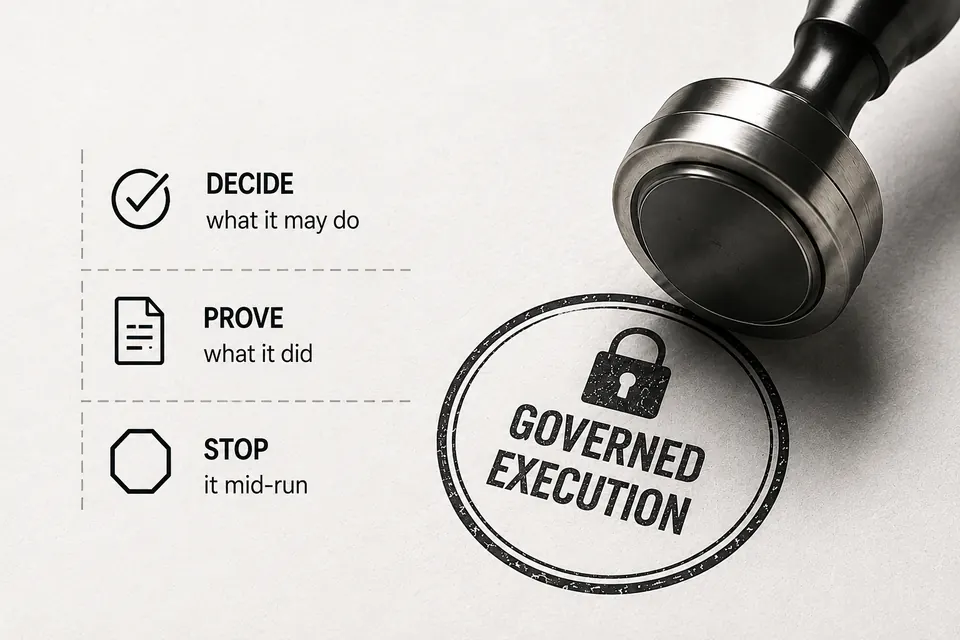
The honest answer to whether AI agents are safe is: only when they are governed. Scope, approvals, and audit trails are what turn an autonomous agent into one you can trust.

Key takeaways
- AI agents are safe for business when they are governed, not by default.
- The three controls that matter are scoped access, approval gates, and an audit trail.
- Start with one workflow, keep humans on the sensitive steps, and widen scope on evidence.
Are AI agents safe for business? The honest answer is that they are safe when they are governed, and risky when they are not. Safety is not a property of the underlying model. It comes from the boundaries you put around what the agent is allowed to do. An agent with unlimited access and no oversight is a hazard no matter how capable the model behind it. The same model, scoped and supervised, can be a dependable part of how work gets done.
So the useful question is not whether AI agents are safe in the abstract. It is what makes a specific agent safe enough to trust with real work. Three controls do most of that work.
Scoped access: limit what it can reach
The first control is scope. A safe agent operates with the least access it needs to do its job, and nothing more.
That means defining, per agent, which systems it can connect to, which data it can read or write, and which actions it may take. An agent handling vendor renewals might reach your procurement tool and your e-signature service and nothing else. It should not have standing access to finance or HR unless you explicitly grant it, and its credentials should be scoped to the task and revocable at any time. When access is narrow, the blast radius of any mistake is narrow too.
Approval gates: stop at the actions that matter
The second control is human approval on the steps that carry risk.
A safe agent does not treat every action the same. Reading a document and drafting a summary are low stakes. Sending a contract, moving money, or deleting a record are not. For those, the agent should pause and wait for a person to approve, reject, or redirect. When it reaches a gated action, it should present the goal, the proposed action, the evidence it gathered, and the likely impact, so the approver can decide quickly and well. This is what removes the category of silent, irreversible mistakes.
Audit trail: be able to see what happened
The third control is a complete record of what the agent did.
Every meaningful action should be logged with context: the goal that was set, the plan it generated, the steps it took, what was approved, and the outcome. This does two things. It lets you review and improve how the agent behaves, and it gives you evidence when a decision is questioned later, whether by an auditor, a customer, or your own team. An agent you cannot inspect is an agent you cannot trust, however well it seems to perform.
Why default autonomy is the real risk
Most of the worry about AI agents comes from imagining the ungoverned version: an agent handed broad access and left to act, where you find out what it did only after the fact. That version is genuinely risky, and it is worth being clear-eyed about it.
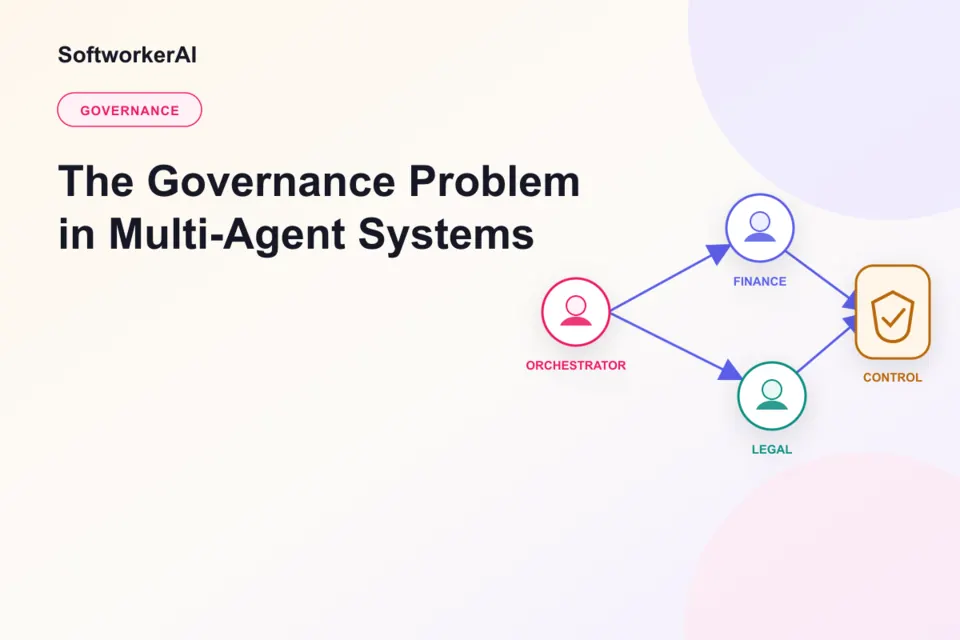
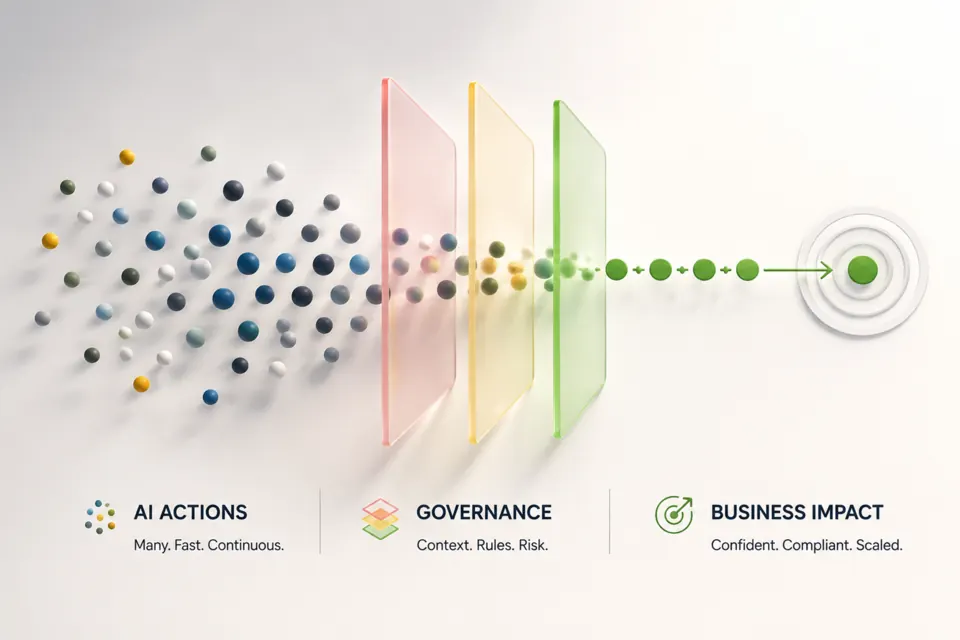
Governance is the answer to that risk, not a reason to avoid agents altogether. The goal is not maximum autonomy. It is the right autonomy, wide where the work is safe and routine, narrow and gated where a mistake would be costly. For more on that distinction, see our explainer on what a governed AI agent is and the comparison of governed versus ungoverned AI agents.
How to adopt agents safely
Making AI agents safe for your business is less about the model you choose and more about how you introduce them. A sensible path looks like this.
Pick one workflow that is repetitive and rule-bound. Write down what the agent may do on its own and what must come to a person first. Connect only the systems it needs. Put approval gates on the sensitive actions. Run it supervised at first, so you can watch it on real work, then widen its scope only as the decisions prove out. A full walkthrough is in our guide on how to adopt governed AI agents safely.
The takeaway
AI agents are safe for business when they are governed. Scoped access limits what a mistake can touch, approval gates keep a person on the decisions that carry risk, and an audit trail means you can always see what happened. Put those three in place, start small, and expand on evidence, and an AI agent becomes something you can rely on rather than something you have to worry about.
This is a topic where reasonable people weigh risk differently, and the right level of autonomy depends on your industry, your data, and your tolerance for error. The controls above are what let you set that level deliberately rather than by default.