Approvals are a feature, not a friction
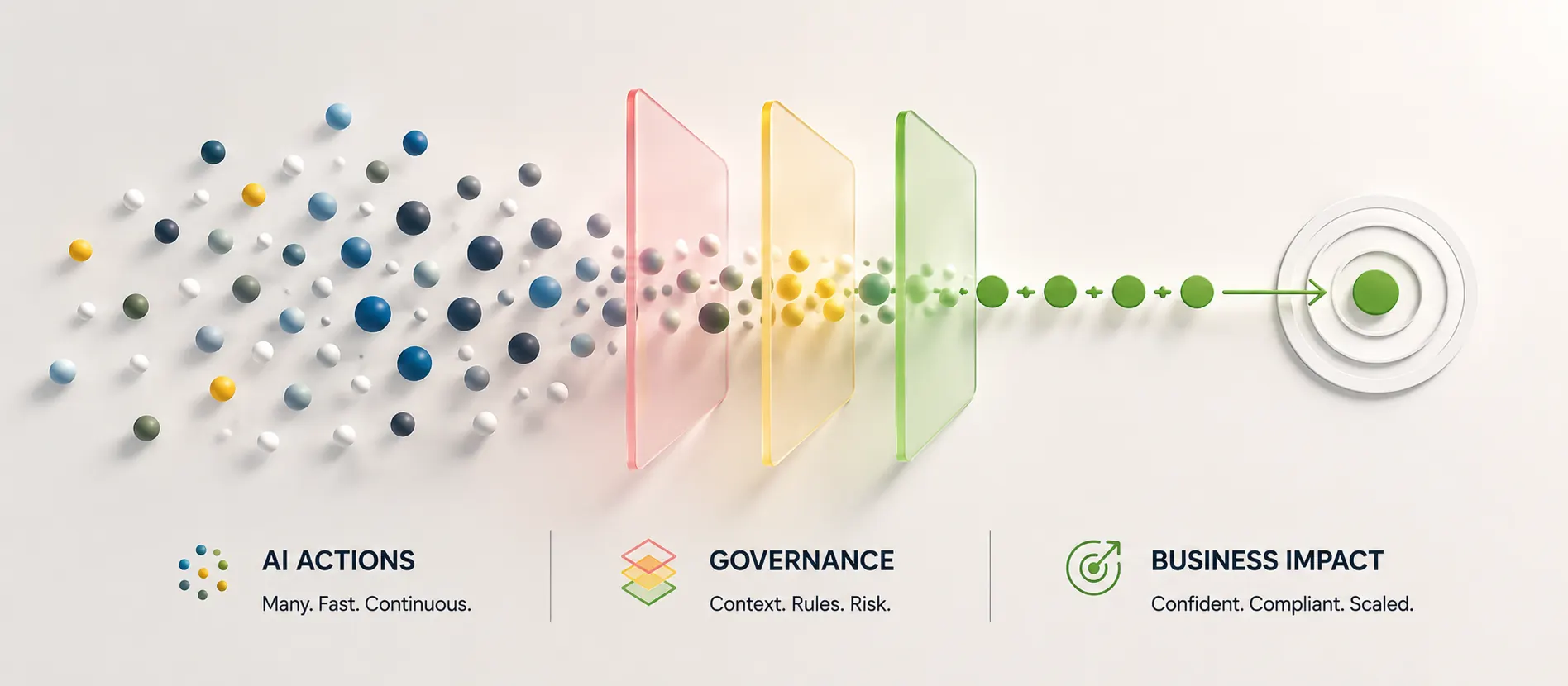
Approval is often treated as the thing slowing automation down. In business AI execution, it is the mechanism that lets more work move without pretending every action has the same risk.

Key takeaways
- Approval gates should be based on risk and reversibility, not generic caution.
- Good approvals include context, a recommendation, and the exact action being authorized.
- Human sign-off can increase automation coverage by making sensitive steps acceptable.
Teams often describe approvals as drag. The intuition is understandable: every approval looks like a delay from the vantage point of a single task.
But in business AI execution, approvals have a different job. They let the system distinguish between routine work and consequential work. Without that distinction, teams either over-automate risky actions or under-automate everything.
Approval is a control surface
The goal is not to ask for permission at every step. The goal is to ask for permission at the steps that change risk.
Those steps usually fall into a few categories:
- Spending money or changing financial records.
- Sending external communications.
- Modifying customer, employee, or vendor data.
- Deleting or replacing source-of-truth information.
- Committing an organization to a legal or contractual position.
When those actions are gated, an AI agent can still do the preparatory work: gather evidence, draft the update, compare alternatives, and recommend a path.
What a useful approval includes
An approval request should not be a vague “approve?” button. It should make the reviewer faster and more confident.
A good approval includes:
- The goal the agent is pursuing.
- The proposed action in concrete terms.
- The systems and records affected.
- The evidence used to reach the recommendation.
- The expected outcome.
- The fallback if approval is denied.
This is where AI can help without hiding responsibility. The agent prepares the decision packet. The human makes the decision.
Approvals increase automation coverage
The counterintuitive part is that approval gates can make automation broader, not narrower.
Without approvals, teams restrict the AI to low-impact work. With approvals, the same agent can participate in higher-value processes because sensitive actions have a controlled pause.
That is the difference between “AI can draft an email” and “AI can prepare the renewal workflow, pause for pricing approval, then send the approved packet.”
The audit trail is part of the approval
Approval also needs memory. Six months later, a compliance leader should be able to see what was approved, by whom, with what context, and what happened afterward.
When approvals and audit are connected, the organization gets both speed and accountability.