A practical readiness checklist for business AI agents
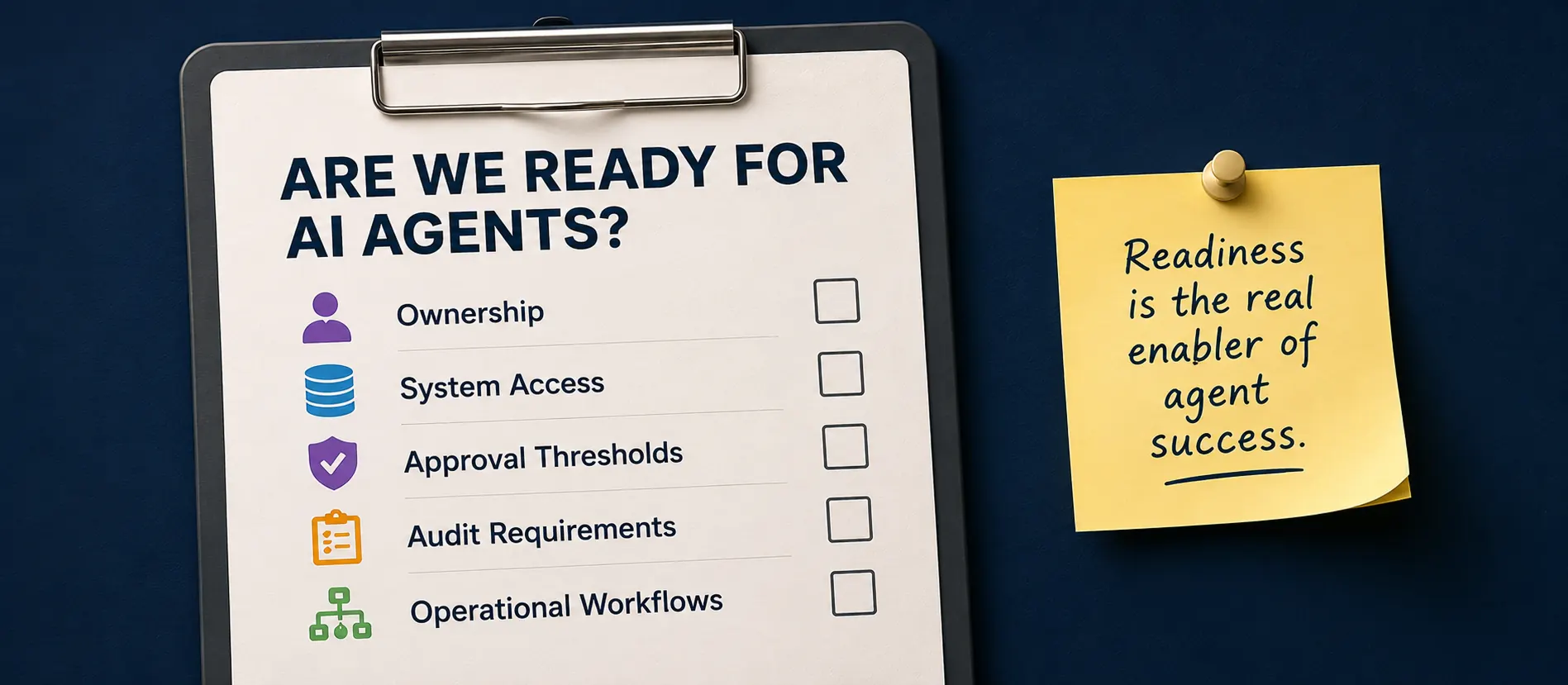
A readiness checklist for teams evaluating AI agents: start with ownership, system access, approval thresholds, audit requirements, and the operational workflows where autonomy is actually useful.

Key takeaways
- Start readiness planning with ownership and scope, not model choice.
- The best early workflows are valuable, bounded, and reviewable.
- Security, compliance, and operations should agree on evidence requirements before launch.
Small and medium businesses evaluating AI agents often begin with demos. That is natural, but demos can overemphasize fluency and underemphasize fit.
A better readiness review starts with the operating conditions around the work.
1. Is there a clear owner?
Every AI agent needs a human owner. That owner is responsible for scope, escalation, and outcome quality.
If nobody owns the workflow today, adding an agent will not fix the ambiguity.
2. Is the workflow valuable and bounded?
The best starting workflows are not tiny toys or enormous transformations. They are valuable enough to matter and bounded enough to govern.
Good candidates often include renewal preparation, invoice review, onboarding packets, access request triage, and operational reporting.
3. Are system permissions explicit?
List the systems the agent needs and the exact permissions required.
Read-only access is different from write access. Drafting is different from sending. Preparing a payment is different from releasing one.
4. Are approval thresholds defined?
Before launch, define when the agent must pause.
Examples:
- Discounts above policy.
- External sends.
- Payment release.
- Deletion or overwrite.
- Access outside a user’s normal entitlement.
5. Is the evidence requirement clear?
The agent should know what evidence a reviewer expects. This might include source documents, calculations, policy references, or user confirmations.
When evidence is defined upfront, the agent can gather it before the approval request.
6. Can the outcome be measured?
Pick metrics that match the workflow. Cycle time, exception rate, approval quality, rework, and audit completeness are often better than generic productivity claims.
Readiness is not about proving AI is interesting. It is about proving a specific kind of work can be delegated responsibly.