How an AI agent for invoice processing keeps a human in control
Invoice processing is high volume, rule-bound, and unforgiving of errors. A governed AI agent can read, match, and code invoices while routing every payment decision to a person.

12 articles, newest first.
Invoice processing is high volume, rule-bound, and unforgiving of errors. A governed AI agent can read, match, and code invoices while routing every payment decision to a person.
Small teams have the most to gain from AI agents and the least room for a mistake. Governed AI gives a lean business the leverage of automation without giving up oversight.
Expense reports are repetitive, rule-bound, and easy to get wrong. A governed AI agent can read receipts, apply policy, and route the judgment calls to a human, while recording every step.
Adding an assistant to a chat window does not make a workspace where humans and AI agents work together. Six design decisions do, and most of them are about control rather than capability.
Support is more than answering questions. A governed AI agent can triage, draft, and resolve routine tickets while keeping a person on refunds, escalations, and anything sensitive.
Three very different products are sold under the same name. Only one of them is somewhere a team can actually work, and six questions tell you which is which.
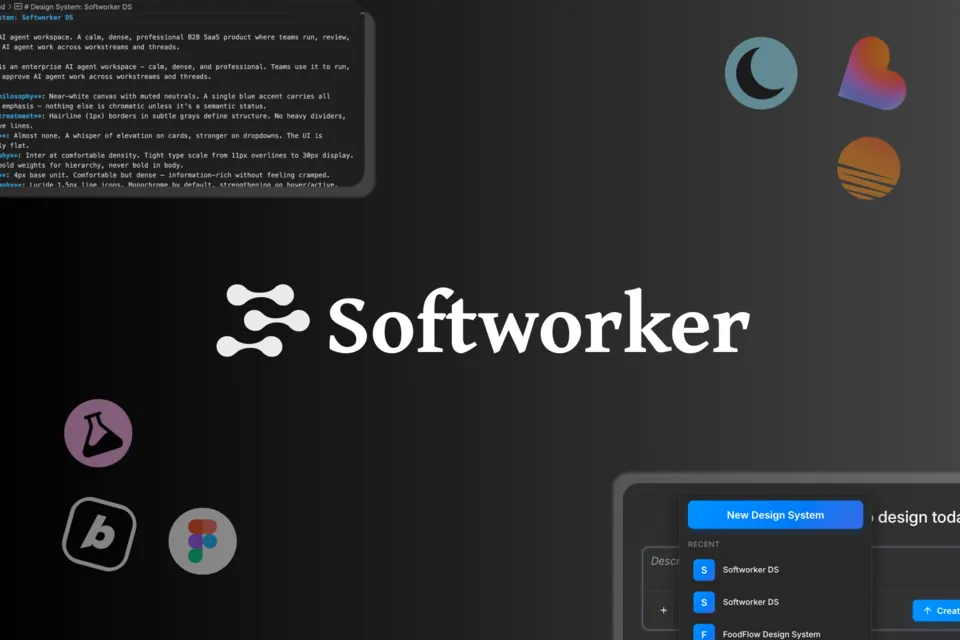
AI can generate a hundred screens in a minute. Most of them are slop. Here is the working method I use to keep AI in the loop without letting it flatten the product.
Google Docs beat Word by going multiplayer. Figma beat Photoshop. AI has not had that moment yet, and the missing piece is not shared context. It is shared control.
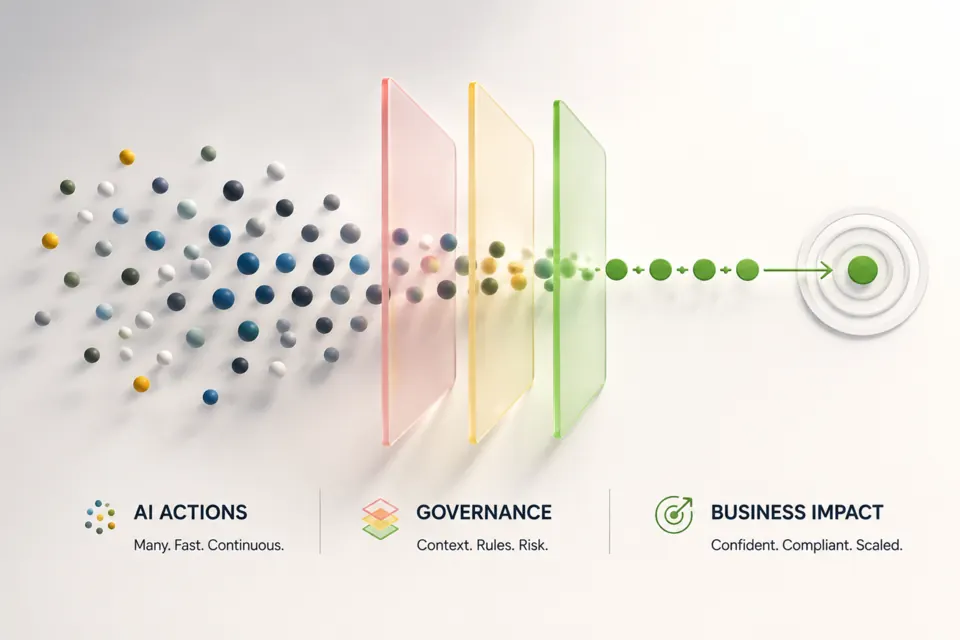
Approval is often treated as the thing slowing automation down. In business AI execution, it is the mechanism that lets more work move without pretending every action has the same risk.
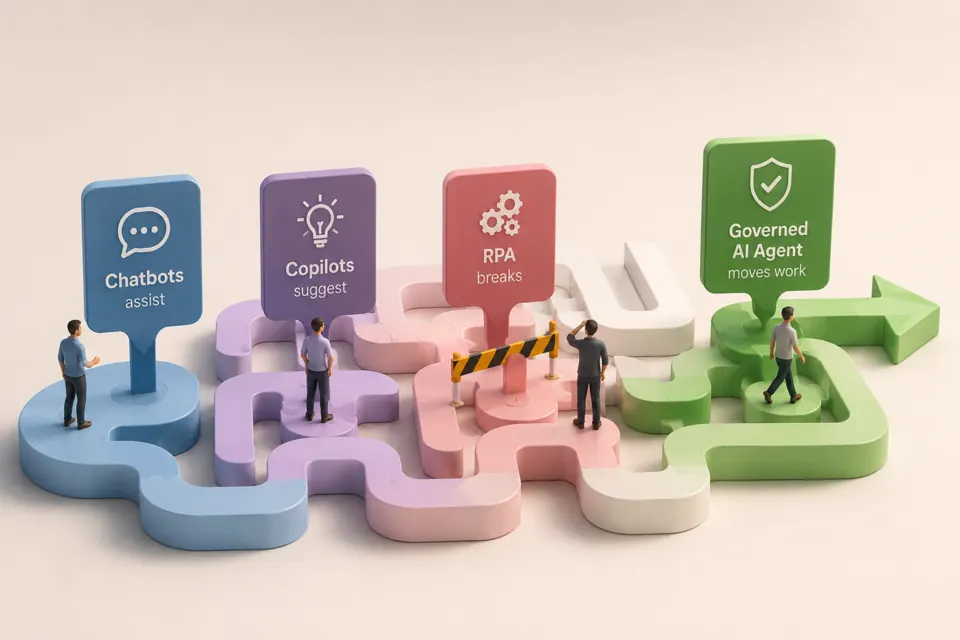
Different AI and automation categories solve different parts of the work problem. The missing category is the governed AI agent that can plan, pause, execute, and produce evidence.

Human-in-the-loop design can be precise rather than performative. The checkpoint should appear at the moment risk changes, with enough context for a fast decision.
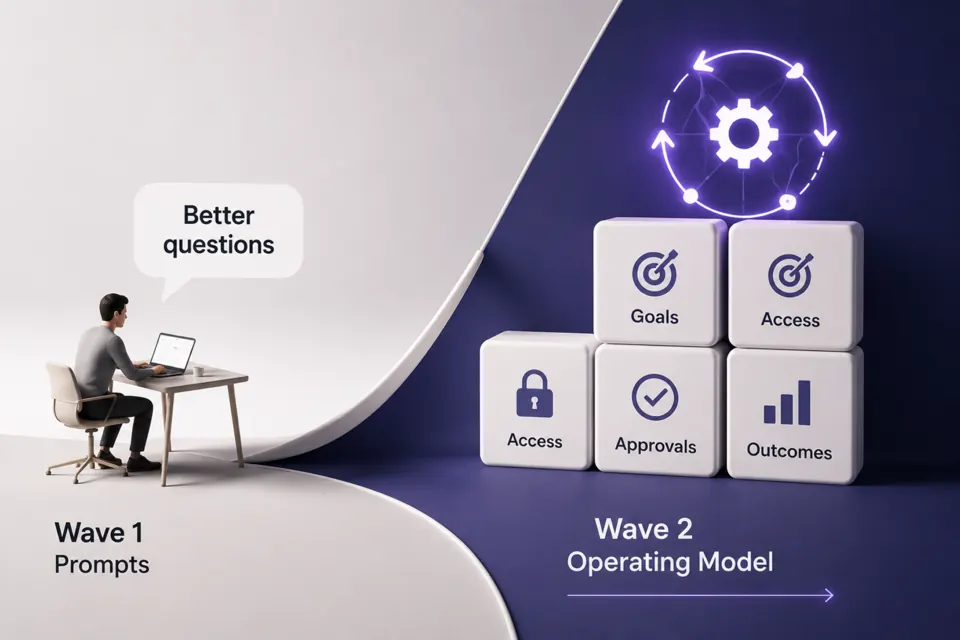
The first wave of AI adoption teaches people how to ask better questions. The next wave asks how goals, access, approvals, and outcomes become a repeatable operating model.